Cuisine of Ecuador- A story of Mountains, Forests and Waters
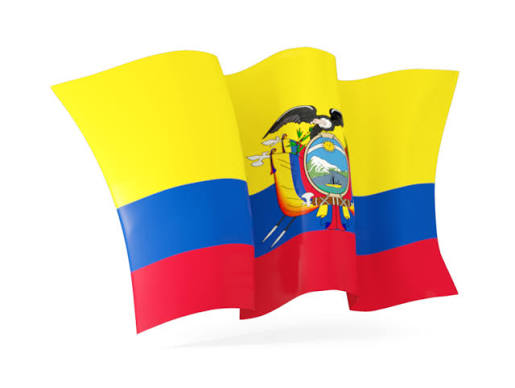
Ecuadorian cuisine is a remarkable reflection of the country’s extraordinary geography, cultural diversity, and centuries of history. Although Ecuador is one of South America’s smallest nations, it possesses an astonishing variety of landscapes—from the snow-capped Andes Mountains and fertile Pacific coast to the lush Amazon rainforest and the unique Galápagos Islands. Each region contributes its own ingredients, cooking methods, and traditions, making Ecuadorian cuisine one of the continent’s most diverse culinary heritages.
The story of Ecuadorian food begins thousands of years before the arrival of Europeans. Indigenous civilizations such as the Quitu, Cañari, Caranqui, and later the Inca cultivated maize, potatoes, beans, squash, quinoa, peanuts, chili peppers, and numerous tropical fruits. Corn was especially sacred, serving not only as a staple food but also as an important ingredient in ceremonial drinks like chicha, a fermented maize beverage still prepared in many rural communities.
Along the Pacific coast, fishing communities harvested an abundance of seafood including shrimp, tuna, crab, oysters, and a variety of fish. Inland, the Andean highlands became famous for potatoes, corn, broad beans, and guinea pig (cuy), which had been domesticated for over 5,000 years. In the Amazon, indigenous groups relied on cassava (yuca), plantains, river fish, wild fruits, and medicinal herbs, developing cooking techniques that remain largely unchanged today.
The arrival of the Spanish in the sixteenth century transformed Ecuadorian cuisine. European settlers introduced cattle, pigs, sheep, chickens, wheat, rice, onions, garlic, citrus fruits, olives, dairy products, and new cooking techniques. These ingredients blended with native foods rather than replacing them, creating a unique fusion. Soups became richer with milk and cheese, meats gained prominence, and desserts incorporated sugar and wheat flour.
African influences also played an important role, particularly along Ecuador’s northern coast in Esmeraldas Province. Enslaved Africans brought culinary traditions centered on coconut milk, plantains, seafood, and slow-cooked stews. Their legacy remains evident in dishes that combine fish, shellfish, coconut, and aromatic herbs.
Perhaps no country in South America demonstrates regional diversity as clearly as Ecuador. Every geographical zone has developed its own distinctive culinary identity.
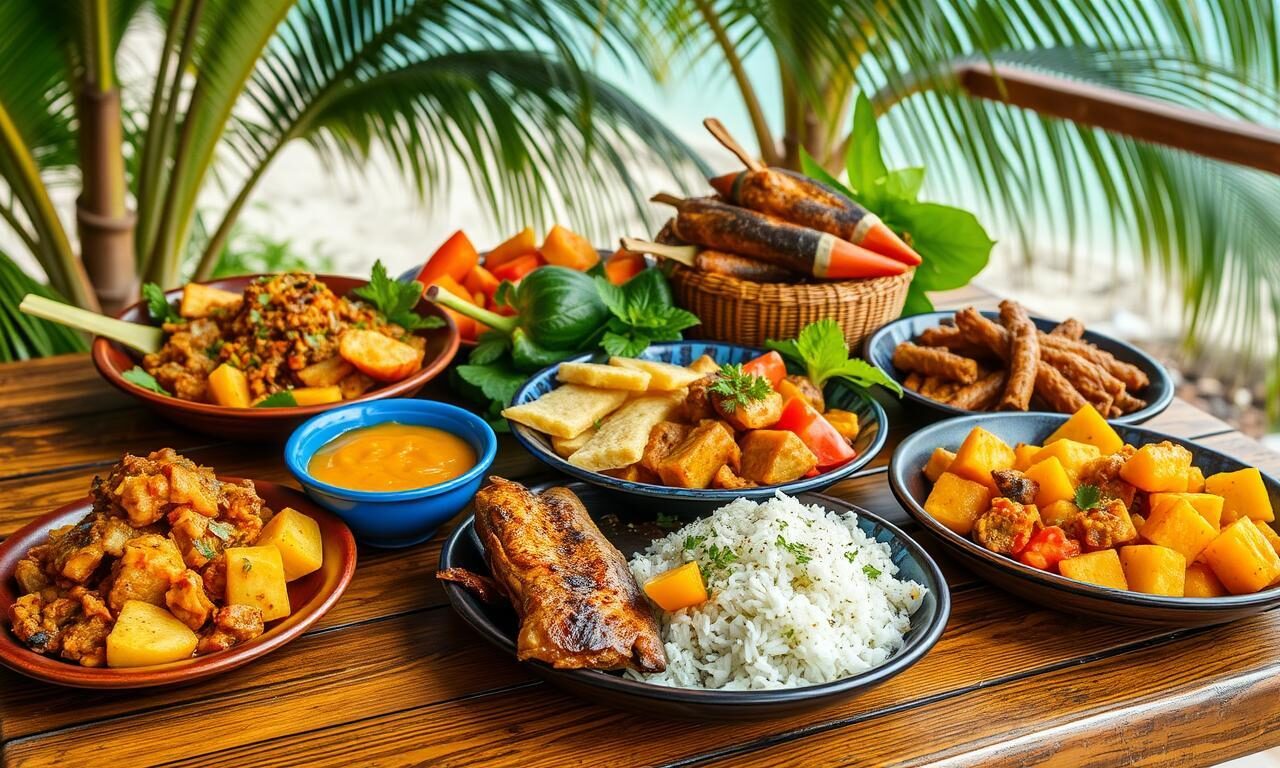
The Coastal Region (La Costa) enjoys a tropical climate and abundant marine resources. Rice accompanies nearly every meal, while seafood is prepared fresh in countless ways. Coconut, green plantains, cassava, peanuts, and tropical fruits such as mangoes, papayas, pineapples, and passion fruit flourish here. Coastal cuisine is vibrant, colorful, and deeply influenced by both Indigenous and Afro-Ecuadorian traditions.
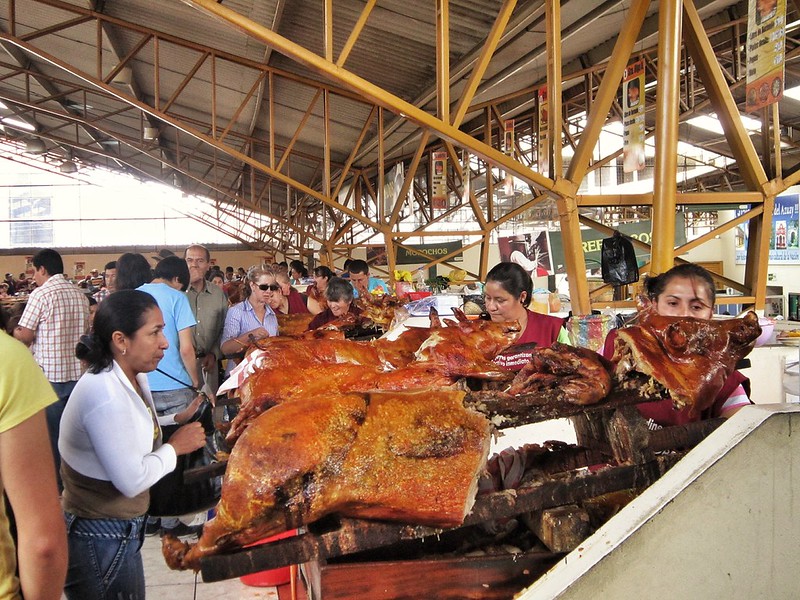
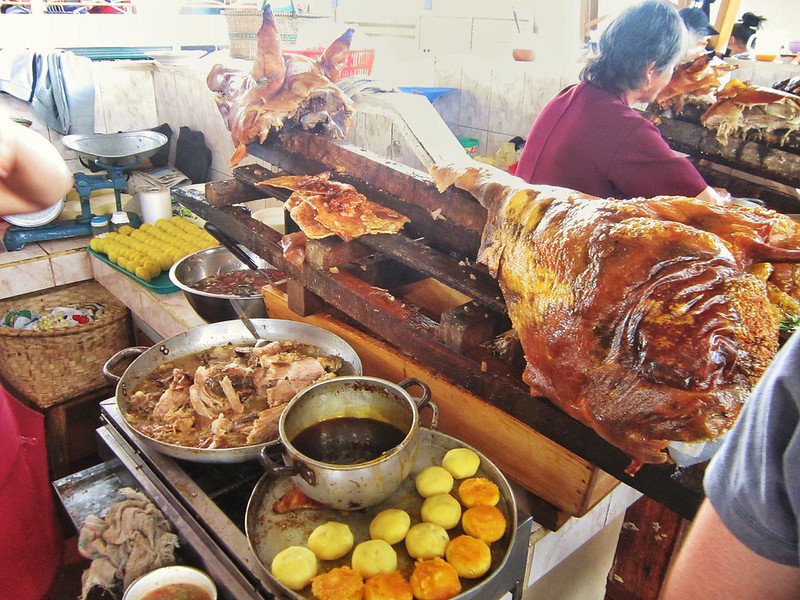
The Andean Highlands (La Sierra) are known for hearty meals designed to provide warmth and energy in the cool mountain climate. Potatoes, corn, barley, quinoa, pork, beef, and dairy products dominate the table. Soups hold a particularly important place, often served as the first course of every meal. Traditional festivals frequently feature roasted pig, guinea pig, and corn-based delicacies.
The Amazon Region (El Oriente) offers an entirely different culinary experience. Freshwater fish, cassava, palm hearts, wild mushrooms, medicinal herbs, and exotic fruits form the foundation of daily meals. Many dishes are wrapped in bijao leaves and cooked over open fires, preserving ancient indigenous cooking traditions.
The Galápagos Islands, although geographically isolated, have developed a cuisine based primarily on fresh seafood, tropical fruits, and vegetables imported from mainland Ecuador. Sustainable fishing practices play an important role due to the islands’ unique ecosystem.
Soups occupy a central place in Ecuadorian dining culture. They are considered nourishing and often appear as the opening course of lunch, the country’s main meal. From creamy potato soups enriched with cheese to seafood chowders and hearty grain-based broths, Ecuadorians have perfected the art of comforting soups.
Corn remains one of the nation’s most beloved ingredients. It appears in countless forms—boiled kernels, roasted corn, corn cakes, tamales, empanadas, beverages, and desserts. Potatoes are equally important, with dozens of native varieties cultivated across the Andes. Ecuador also boasts an impressive diversity of bananas and plantains, both sweet and green, which are fried, mashed, boiled, roasted, or transformed into crispy snacks.
Fresh cheese, avocados, peanuts, cilantro, cumin, annatto (achiote), and locally grown herbs contribute distinctive flavors. Unlike some neighboring cuisines, Ecuadorian food is generally mild rather than intensely spicy, allowing the natural flavors of fresh ingredients to shine.
Family meals remain the heart of Ecuadorian culture. Lunch is traditionally the largest meal of the day, often consisting of soup, rice, meat or seafood, fresh juice, and dessert. Markets overflow with seasonal produce, fresh seafood, handmade cheeses, herbs, and colorful fruits, reflecting the country’s agricultural richness.
Festivals and religious celebrations are closely connected to food. Easter is marked by Fanesca, a rich soup prepared with grains, beans, salted cod, and dairy, symbolizing unity and faith. Christmas and New Year celebrations feature roasted pork, tamales, and festive sweets. During local harvest festivals, communities prepare traditional dishes using freshly harvested corn, potatoes, and beans.
Today, Ecuadorian cuisine continues to evolve. Young chefs are rediscovering indigenous ingredients, promoting sustainable farming, and presenting traditional recipes with modern techniques while preserving their cultural identity. Fine-dining restaurants in Quito, Guayaquil, and Cuenca proudly showcase native products such as quinoa, cacao, Amazonian herbs, and heirloom potatoes, earning international recognition.
Despite modernization, Ecuadorian cuisine remains deeply rooted in its landscapes and traditions. Every meal tells the story of mountains, forests, rivers, and oceans; of Indigenous wisdom, Spanish heritage, African resilience, and generations of families who have preserved recipes passed down through centuries. Rich in history, biodiversity, and cultural pride, Ecuadorian cuisine stands as one of South America’s most authentic and diverse gastronomic traditions.
Famous Dishes of Ecuador
1. Ceviche
Ecuadorian ceviche is one of the country’s most iconic dishes. Unlike the Peruvian version, it is served with a generous amount of citrus-based marinade mixed with tomato, onions, cilantro, and sometimes ketchup. It is prepared with shrimp, fish, oysters, black clams, octopus, or mixed seafood and is traditionally accompanied by popcorn, toasted corn (maíz tostado), or plantain chips.
Main Ingredients: Shrimp or fish, lime juice, tomatoes, onions, cilantro, orange juice, salt, pepper.
2. Encebollado
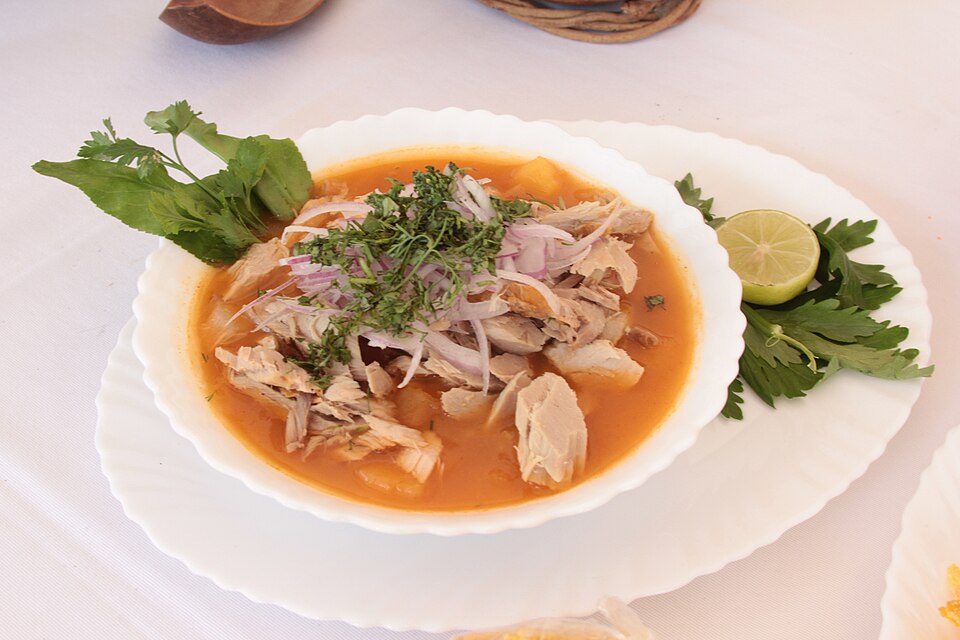
Often regarded as Ecuador’s national dish, encebollado is a hearty fish soup made with fresh tuna, cassava (yuca), onions, tomatoes, cilantro, cumin, and spices. It is especially popular as a breakfast and is famously believed to cure hangovers. The soup is served with lime wedges, popcorn, toasted corn, or plantain chips.
Main Ingredients: Tuna, cassava, onions, tomatoes, cilantro, cumin, lime.
3. Llapingachos
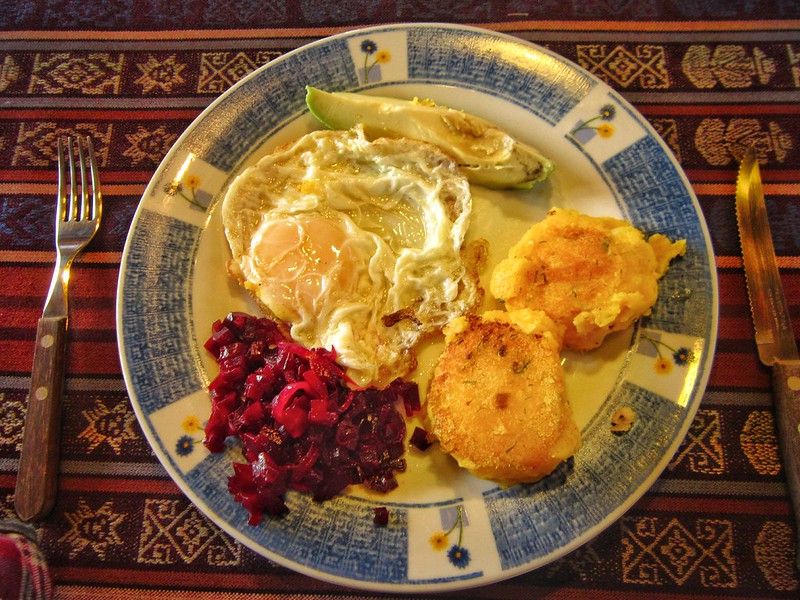
Llapingachos are delicious potato patties stuffed with fresh cheese and pan-fried until golden brown. They are commonly served with peanut sauce, fried eggs, avocado, sausage (chorizo), salad, and pickled onions, making them one of the Andes’ favorite comfort foods.
Main Ingredients: Potatoes, cheese, annatto, butter, peanut sauce.
4. Hornado
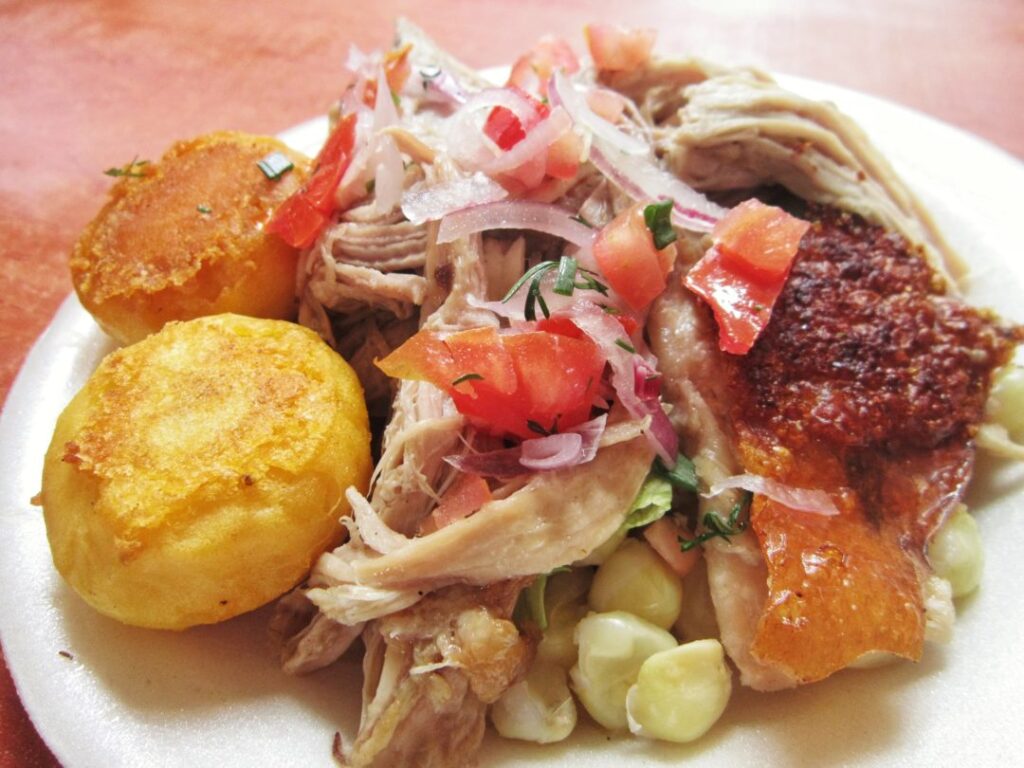
Hornado is slow-roasted pork cooked for several hours until the meat becomes tender and the skin turns crispy. It is a centerpiece at festivals and family gatherings throughout the Andean highlands. The dish is traditionally served with hominy corn (mote), fried plantains, potato patties, avocado, and fresh salad.
Main Ingredients: Pork, garlic, cumin, beer or chicha, onions, herbs.
5. Fanesca
Prepared only during Holy Week, Fanesca is Ecuador’s most celebrated festive soup. It combines salted cod with a rich mixture of grains, beans, squash, milk, cheese, peanuts, and herbs. Each ingredient symbolizes one of the Apostles, making the dish deeply connected to Ecuadorian religious traditions.
Main Ingredients: Salted cod, milk, cheese, pumpkin, beans, corn, peas, peanuts.
6. Seco de Chivo
Seco de Chivo is a flavorful stew traditionally made with goat meat slowly simmered in beer or chicha, tomatoes, peppers, garlic, onions, cumin, cilantro, and spices. It is usually served with yellow rice, ripe fried plantains, avocado, and salad.
Main Ingredients: Goat meat, beer, tomatoes, peppers, onions, garlic, cilantro.
7. Cuy Asado
Roasted guinea pig, or Cuy Asado, has been eaten in the Andes for over 5,000 years and remains an important ceremonial dish. The whole guinea pig is seasoned with garlic, cumin, and herbs before being roasted until crisp. It is commonly served with potatoes, corn, and spicy sauces.
Main Ingredients: Guinea pig, garlic, cumin, herbs, potatoes.
8. Bolón de Verde
A beloved breakfast specialty from Ecuador’s coast, Bolón de Verde is made by mashing fried green plantains with cheese, pork cracklings (chicharrón), or both. The mixture is shaped into large balls and lightly fried before serving with coffee, eggs, or grilled meat.
Main Ingredients: Green plantains, cheese, pork cracklings, butter.
9. Encocado de Pescado
Originating from the Afro-Ecuadorian communities of Esmeraldas, Encocado de Pescado is a fragrant fish stew simmered in creamy coconut milk with tomatoes, peppers, onions, garlic, cilantro, and spices. It is served with steamed rice and fried plantains.
Main Ingredients: Fish, coconut milk, tomatoes, onions, peppers, cilantro.
10. Empanadas de Viento
Meaning “Wind Empanadas,” these light and crispy pastries are filled with fresh cheese, folded into thin dough, deep-fried until puffed, and dusted with sugar. They are one of Ecuador’s most popular street snacks and are often enjoyed with hot coffee or fruit juice.
Main Ingredients: Wheat flour, fresh cheese, butter, eggs, sugar.
Honorable Mentions
- Locro de Papa – Creamy potato and cheese soup topped with avocado.
- Guatita – Tripe stew cooked in a rich peanut sauce.
- Humitas – Sweet or savory steamed corn cakes wrapped in corn husks.
- Tigrillo – Scrambled green plantains mixed with eggs and cheese.
- Mote Pillo – Hominy corn sautéed with eggs, onions, and cheese.
- Chaulafán – Ecuadorian-style fried rice inspired by Chinese immigrants.
- Patacones – Twice-fried green plantain slices served as a side dish or snack.
- Muchines de Yuca – Fried cassava fritters stuffed with meat or cheese.

Recent Comments