Moroccan Cuisine: A Story of Spices, Caravans, and Timeless Traditions
As the first rays of the sun illuminate the ochre walls of Marrakech and the narrow blue streets of Chefchaouen, the aroma of freshly baked bread, simmering tagines, and fragrant mint tea fills the air. Moroccan cuisine is more than food—it is a living story shaped by centuries of trade, migration, and cultural exchange. Every meal reflects the country’s remarkable history, where Africa, Europe, and the Middle East meet.
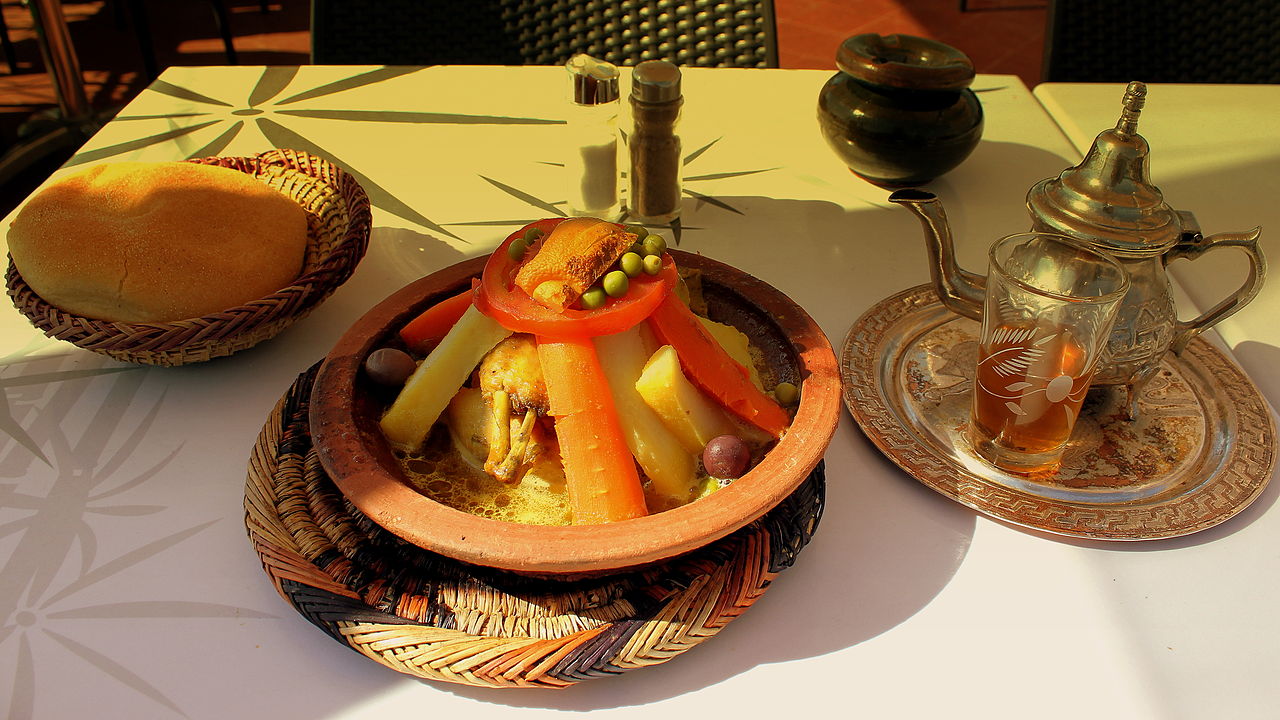
Morocco’s culinary heritage dates back thousands of years. The indigenous Amazigh (Berber) people laid the foundation of the cuisine by cultivating wheat, barley, olives, dates, almonds, and figs. They mastered slow-cooking techniques and created the iconic tagine, a cone-shaped earthenware pot that gently cooks meat and vegetables over low heat, preserving flavor and moisture.
During the 7th century, Arab traders and settlers introduced spices such as cinnamon, cumin, saffron, ginger, turmeric, and coriander. Along with these came dried fruits, nuts, and new cooking traditions that transformed everyday meals into richly flavored feasts. The arrival of Islam also shaped Moroccan dining customs, emphasizing hospitality, communal meals, and generous sharing.
The medieval trans-Saharan trade routes made Morocco one of the world’s great spice crossroads. Caravans carrying gold, salt, ivory, and exotic spices crossed the Sahara, bringing flavors from West Africa and the Middle East. Markets overflowed with pepper, cloves, cardamom, nutmeg, and saffron, allowing Moroccan cooks to create sophisticated spice blends like Ras el Hanout, a mixture that may contain more than twenty carefully balanced spices.
The influence of Andalusia arrived after Muslim and Jewish communities fled Spain following the Reconquista. They introduced refined culinary techniques, pastries scented with orange blossom water, preserved lemons, sweet-and-savory combinations, and elegant desserts made with almonds and honey. Moroccan Jewish communities further enriched the cuisine with distinctive Sabbath dishes, preserved foods, and festive recipes that remain cherished today.
Later, the Ottoman world influenced certain spice combinations and cooking methods, while European contact—especially with France and Spain—introduced pastries, café culture, and modern baking techniques. Yet Morocco carefully preserved its culinary identity, blending foreign influences without losing its traditional character.
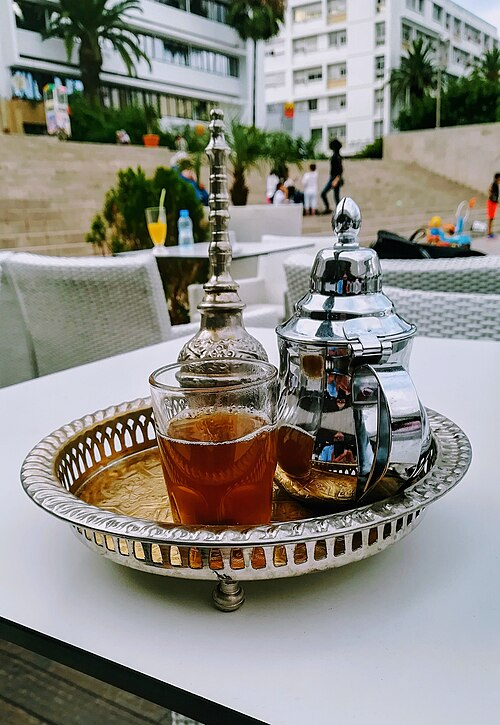
At the heart of every Moroccan home is hospitality. Guests are welcomed with sweet mint tea, often called the “Moroccan whiskey,” poured gracefully from a height into delicate glasses. Sharing tea is not simply a refreshment—it is a gesture of friendship, respect, and warmth.
Bread occupies a sacred place in Moroccan daily life. Fresh round loaves are baked each morning and accompany nearly every meal. Families often bring homemade dough to communal neighborhood ovens, where skilled bakers produce beautifully crusted loaves shared around the table.
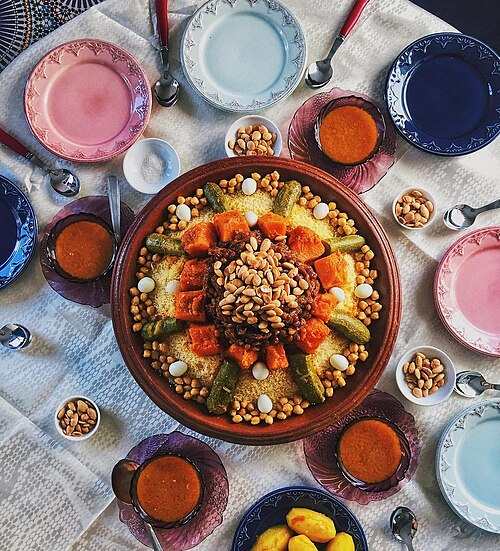
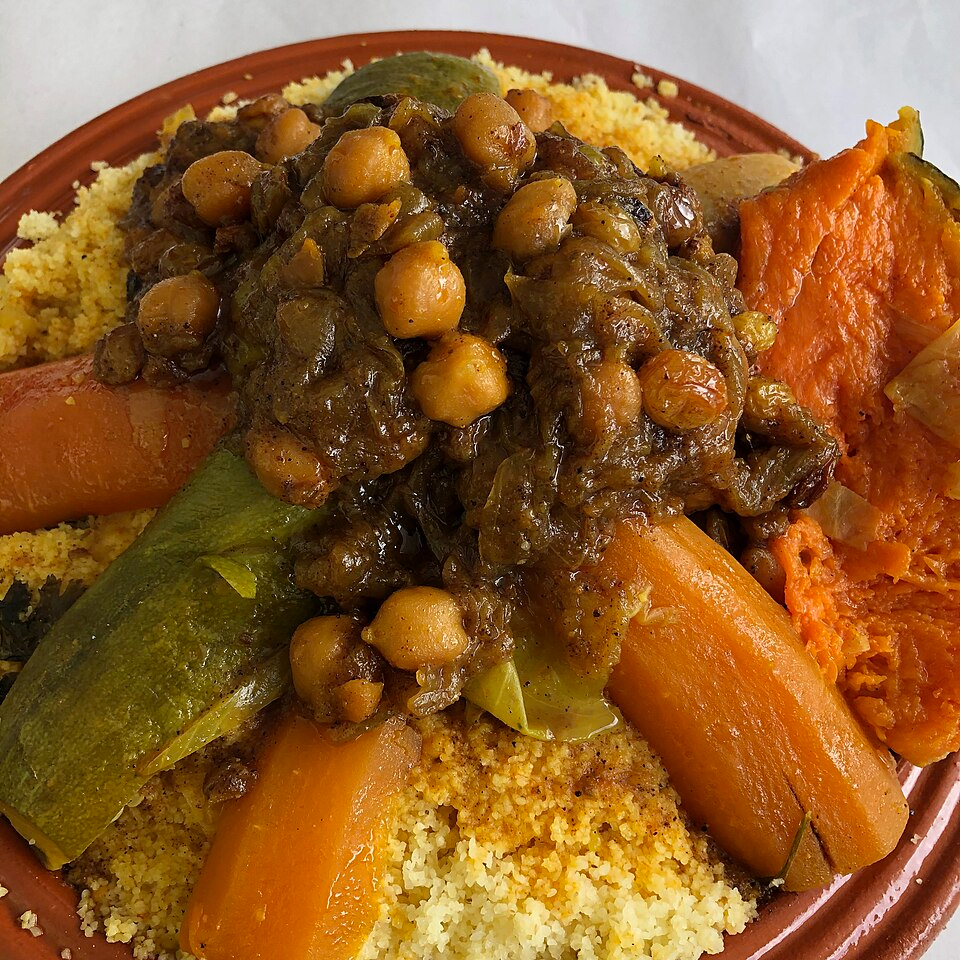
Meals are traditionally enjoyed together from a large communal dish. Family members gather around the table and eat using pieces of bread or, today, cutlery, reinforcing the values of unity and togetherness. Fridays are especially significant, when families prepare couscous topped with vegetables and tender meat after the weekly prayers.
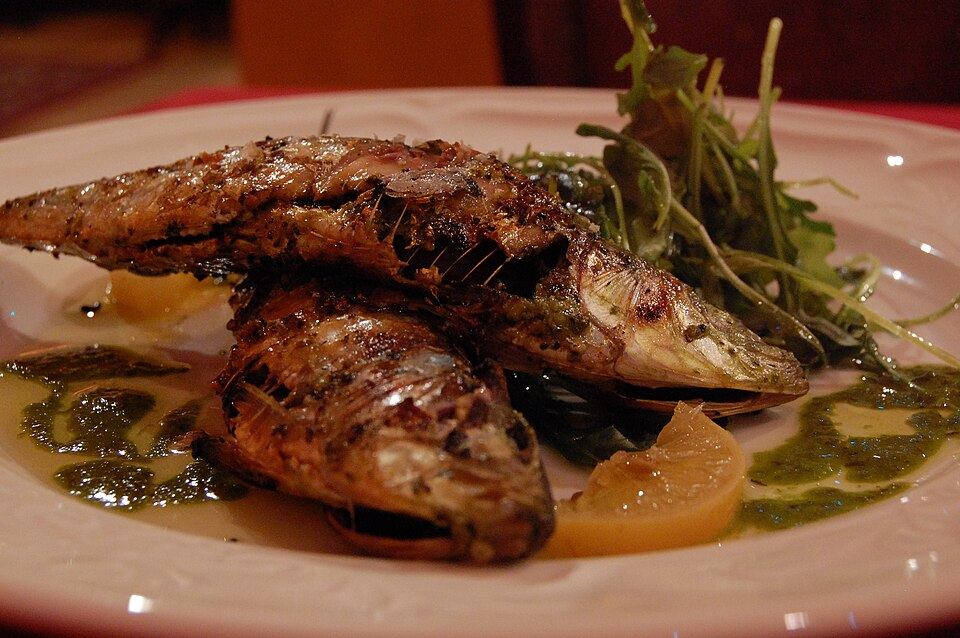
Morocco’s geography creates extraordinary culinary diversity. Along the Atlantic and Mediterranean coasts, seafood such as sardines, sea bream, squid, and shrimp feature prominently. In the fertile plains, vegetables, citrus fruits, olives, and grains flourish. The Atlas Mountains provide lamb, goat, walnuts, apples, and aromatic herbs, while the southern deserts contribute dates, almonds, and preserved foods suited to arid climates.
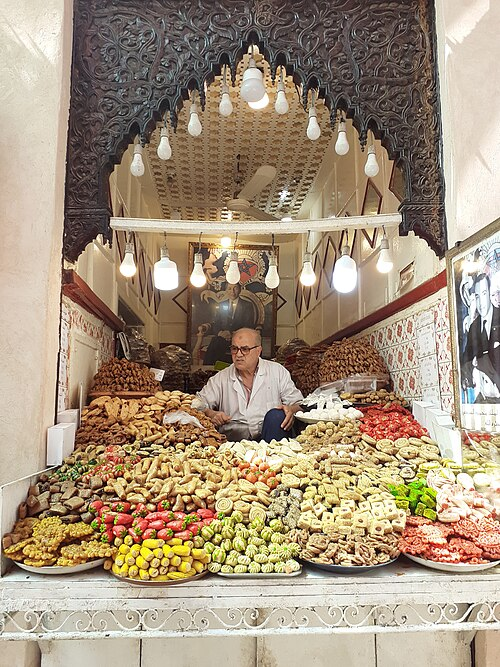
The country’s spice markets, known as souks, are among the most colorful in the world. Pyramids of turmeric, paprika, saffron, cumin, ginger, cinnamon, and dried rose petals create a feast for the senses. Spice merchants carefully blend seasonings according to recipes passed down through generations.
Cooking in Morocco celebrates balance rather than heat. Sweetness from honey, raisins, or dates often complements savory meats. Tangy preserved lemons brighten stews, while olives add richness. Fresh herbs such as parsley, coriander, and mint provide freshness that completes every dish.
Festivals and celebrations feature elaborate meals that symbolize abundance and gratitude. Weddings may include majestic pigeon or chicken pastilla wrapped in delicate pastry, fragrant lamb with prunes and almonds, roasted meats, colorful salads, and intricate desserts served with endless glasses of mint tea.
Today, Moroccan cuisine continues to inspire chefs across the world. Traditional recipes are prepared in homes much as they were centuries ago, while modern restaurants reinterpret classic dishes with contemporary techniques. Despite globalization, Morocco remains deeply connected to its culinary roots, where every spice, every loaf of bread, and every shared meal tells a story of resilience, hospitality, and cultural harmony.
To experience Moroccan cuisine is to travel through history—following ancient caravan routes, wandering bustling spice markets, and gathering around family tables where food is prepared with patience, generosity, and love. It is a cuisine that celebrates the meeting of civilizations while preserving a unique identity that has captivated the world for generations.
Famous Moroccan Dishes
- Tagine – Slow-cooked stew of meat, poultry, seafood, or vegetables prepared in a traditional clay pot.
- Couscous – Steamed semolina served with vegetables, chickpeas, and lamb, chicken, or beef; traditionally enjoyed on Fridays.
- Pastilla (Bastilla) – A flaky pastry filled with spiced pigeon or chicken, almonds, and dusted with cinnamon and sugar.
- Harira – A hearty soup made with tomatoes, lentils, chickpeas, herbs, and spices, especially popular during Ramadan.
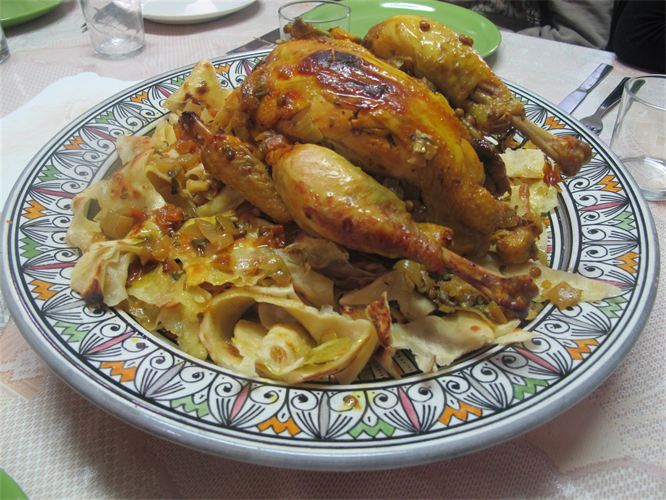
- Rfissa – Shredded flatbread topped with chicken, lentils, onions, and aromatic spices such as fenugreek.
- Mechoui – Whole lamb or shoulder of lamb slow-roasted until tender.
- Zaalouk – A smoky eggplant and tomato salad seasoned with garlic, olive oil, and spices.
- Taktouka – A cooked salad of roasted peppers, tomatoes, garlic, and olive oil.
- Bissara – A creamy fava bean soup often enjoyed for breakfast with olive oil and cumin.
- Kefta Tagine – Spiced meatballs simmered in tomato sauce, often finished with eggs.
- Chermoula Fish – Fish marinated with chermoula, a blend of herbs, garlic, lemon, olive oil, and spices.
- Msemen – Layered Moroccan flatbread commonly served with honey, butter, or savory fillings.
- Baghrir – “Thousand-hole” semolina pancakes served with butter and honey.
- Chebakia – Sesame cookies coated with honey, traditionally prepared during Ramadan.
- Moroccan Mint Tea – Green tea infused with fresh mint and sweetened generously, the country’s signature beverage.

Recent Comments