South Korean Cuisine-The Kimchi culture
South Korean cuisine is a remarkable journey through thousands of years of history, shaped by geography, agriculture, philosophy, trade, religion, invasions, and resilience. More than simply a collection of recipes, Korean food reflects the nation’s identity, emphasizing balance, harmony, community, and seasonal eating.

4
Ancient Beginnings (Before 57 BCE)
The Korean Peninsula has been inhabited for thousands of years. Archaeological discoveries indicate that early inhabitants cultivated millet, barley, and rice while hunting, fishing, and gathering wild vegetables.
Rice gradually became the staple grain in southern Korea, while millet and barley remained important in colder northern regions. Fish, shellfish, seaweed, mushrooms, and mountain herbs formed an essential part of the diet because of Korea’s unique geography—mountains covering nearly 70% of the country and coastlines on three sides.
Even at this early stage, fermentation played an important role. Primitive methods of preserving soybeans, vegetables, and seafood helped people survive harsh winters.
The Three Kingdoms Period (57 BCE–668 CE)
The kingdoms of Goguryeo, Baekje, and Silla each contributed to Korea’s culinary identity.
Rice farming expanded significantly through improved irrigation. Soybeans became increasingly important, leading to the development of fermented soybean products that remain essential today.
Trade with China introduced:
- New grains
- Tea culture
- Improved cooking utensils
- Wheat cultivation
- Agricultural technologies
During this period, fermented soybean paste (doenjang) and soy sauce (ganjang) evolved into everyday seasonings.
Unified Silla and Buddhist Influence (668–935)
With Buddhism flourishing, vegetarian cooking became highly refined.

8
Temple cuisine emphasized:
- Wild mountain vegetables (namul)
- Mushrooms
- Roots
- Soybean products
- Sesame oil
- Minimal seasoning
- Seasonal ingredients
Monks developed cooking techniques that highlighted natural flavors without meat. Many dishes found in modern Korean homes have their origins in Buddhist temple kitchens.
The Goryeo Dynasty (918–1392)
The Goryeo Dynasty witnessed remarkable advances in culinary sophistication.
Royal banquets became elaborate affairs featuring:
- Multiple side dishes (banchan)
- Delicately prepared seafood
- Rice cakes (tteok)
- Traditional sweets
- Fruit wines
Tea ceremonies flourished, and aristocratic cuisine became increasingly refined.
Trade with China and Central Asia introduced spices, fruits, and improved culinary techniques.
The Joseon Dynasty (1392–1910)
The Joseon period laid the foundation for modern Korean cuisine.
Confucian philosophy strongly influenced eating habits. Meals reflected social hierarchy, family values, and respect for elders.
The traditional Korean meal was structured around:
- Rice (bap)
- Soup (guk)
- Kimchi
- Various side dishes (banchan)
- Fermented sauces
Royal palace cuisine reached extraordinary sophistication.


6
Court chefs created intricate dishes balancing:
- Five colors
- Five tastes
- Five nutritional elements
This reflected the East Asian philosophy of harmony.
The Arrival of Chili Peppers
One of the most transformative moments in Korean culinary history was the introduction of chili peppers.
Although many people assume Korean food has always been spicy, chili peppers arrived only during the late 16th or early 17th century, likely through Japanese and Portuguese trade networks after the Japanese invasions of Korea (1592–1598).
Over time, chili peppers revolutionized Korean cooking.
They became essential in:
- Kimchi
- Gochujang
- Stews
- Marinades
- Noodles
Today’s vibrant red kimchi evolved centuries after chilies were introduced.
Kimchi: Korea’s Culinary Soul


-Kimchi
Kimchi predates chili peppers by many centuries.
Originally, it consisted of salted vegetables preserved for winter. With the arrival of chili peppers, garlic, and improved fermentation techniques, kimchi evolved into the iconic dish recognized worldwide today.
Kimchi represents:
- Seasonal preservation
- Community cooperation
- Family traditions
- Nutritional wisdom
Every autumn, families gather for Kimjang, preparing large quantities of kimchi for the winter—a tradition recognized by UNESCO as Intangible Cultural Heritage.
Japanese Colonial Period (1910–1945)
Colonial rule brought significant changes.
Rice production increasingly served Japanese demands, causing shortages for many Koreans.
New ingredients and cooking methods appeared, including:
- Bread
- Curry
- Cutlets
- Japanese noodles
Despite hardship, Koreans preserved their culinary traditions through home cooking.
The Korean War and Recovery (1950–1953)
The Korean War devastated agriculture and food supplies.
People relied on:
- Barley
- Sweet potatoes
- Corn
- Imported flour
Creative adaptations produced dishes that remain popular today, such as budae jjigae (“Army Stew”), which combined local ingredients with surplus foods like canned meats and processed cheese.
The Economic Miracle (1960s–1980s)
Rapid industrialization transformed eating habits.
Urbanization led to:
- Street food culture
- Restaurants specializing in regional dishes
- Instant noodles (ramyeon)
- Fast food adapted to Korean tastes
Traditional foods remained central to family life despite modernization.
Korean Barbecue Culture
One of Korea’s best-known culinary traditions is gogi-gui (grilled meat).
Popular varieties include:
- Bulgogi
- Galbi
- Samgyeopsal
Unlike Western grilling, Korean barbecue emphasizes communal dining, with diners cooking meat together at the table and wrapping it in lettuce with garlic, ssamjang, kimchi, and other accompaniments.
Fermentation: The Heart of Korean Cuisine
Few cuisines rely on fermentation as extensively as Korea’s.
Essential fermented foods include:
- Kimchi
- Doenjang (soybean paste)
- Gochujang (chili paste)
- Ganjang (soy sauce)
- Jeotgal (fermented seafood)
These ingredients provide the deep umami flavors that define Korean cooking.
Modern South Korean Cuisine
Today, South Korea has become a global culinary powerhouse.

4
Traditional dishes coexist with contemporary innovations.
Popular foods include:
- Bibimbap
- Japchae
- Tteokbokki
- Korean fried chicken
- Samgyetang
- Sundubu jjigae
- Naengmyeon
- Kimbap
Chefs are reinterpreting centuries-old recipes using modern techniques while preserving traditional flavors.
Korean Cuisine on the Global Stage
The global popularity of Korean culture—often called the Korean Wave (Hallyu)—has significantly increased interest in Korean food.
Restaurants serving Korean cuisine now thrive in cities worldwide, while ingredients like kimchi, gochujang, and doenjang have become staples in many international kitchens. Korean cuisine is increasingly recognized not only for its bold flavors but also for its emphasis on vegetables, fermentation, balance, and shared dining.
Defining Characteristics of South Korean Cuisine
South Korean cuisine is distinguished by:
- Rice as the foundation of most meals.
- A rich tradition of fermented foods that enhance flavor and preservation.
- An abundance of seasonal vegetables and mountain herbs.
- Extensive use of seafood due to the peninsula’s long coastline.
- Harmony of the five colors and five tastes in meal composition.
- Communal dining with numerous shared side dishes (banchan).
- A balance of spicy, savory, sour, sweet, and umami flavors.
- Deep cultural connections between food, family, and seasonal traditions.
Conclusion
South Korean cuisine tells the story of a nation that has continually adapted while preserving its culinary heritage. From ancient farming communities and Buddhist monasteries to royal palaces, wartime resilience, and modern fine dining, Korean food reflects centuries of innovation and tradition. At its heart are fermentation, seasonality, balance, and the joy of sharing meals—qualities that have made South Korean cuisine one of the world’s most admired and influential culinary traditions.
Monday 7:13 PM
famous dishes
Famous Dishes of South Korean Cuisine

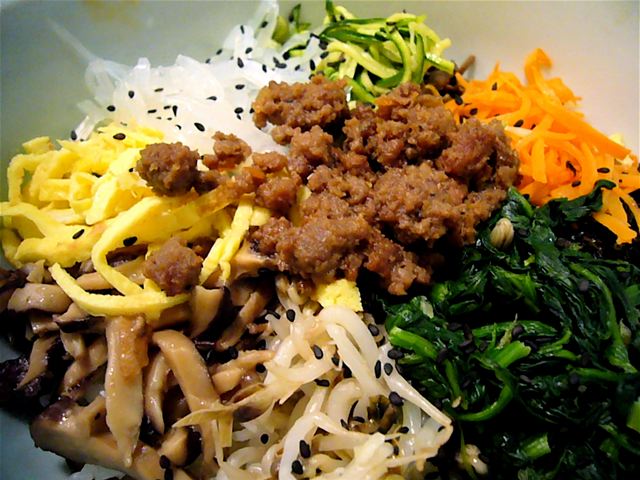
-Bibimpap


-Beef Bulgogi
South Korean cuisine is renowned for its bold flavors, fermented ingredients, vibrant colors, and communal dining traditions. Here are some of the country’s most iconic dishes.
1. Kimchi (김치)
The national dish of Korea, kimchi is made by fermenting vegetables—most commonly napa cabbage or radish—with chili flakes, garlic, ginger, scallions, and salted seafood. Served with almost every meal, it is rich in probiotics and symbolizes Korean culinary heritage.
2. Bibimbap (비빔밥)
Meaning “mixed rice,” bibimbap consists of steamed rice topped with seasoned vegetables, beef, mushrooms, a fried or raw egg, and spicy gochujang (red chili paste). It is mixed thoroughly before eating and represents a perfect balance of flavors and nutrition.
3. Bulgogi (불고기)
One of Korea’s most famous meat dishes, bulgogi features thinly sliced beef marinated in soy sauce, sesame oil, garlic, sugar, pear, and pepper before being grilled or stir-fried. Its sweet and savory flavor has made it popular worldwide.
4. Samgyeopsal (삼겹살)
A favorite social dining dish, samgyeopsal consists of thick slices of pork belly grilled at the table. The meat is wrapped in lettuce leaves with garlic, kimchi, ssamjang (soybean chili paste), and other accompaniments.
5. Galbi (갈비)
Galbi refers to marinated beef or pork short ribs grilled over charcoal. The meat is tender, slightly sweet, and smoky, making it one of Korea’s signature barbecue dishes.
6. Japchae (잡채)
A festive dish made with sweet potato glass noodles stir-fried with vegetables, mushrooms, beef, soy sauce, and sesame oil. Japchae is commonly served during celebrations and holidays.
7. Tteokbokki (떡볶이)
One of Korea’s most beloved street foods, tteokbokki features chewy rice cakes simmered in a spicy, slightly sweet sauce made with gochujang. Fish cakes, boiled eggs, and scallions are often added.
8. Korean Fried Chicken (치킨)
Known for its extra-crispy texture, Korean fried chicken is double-fried and coated with sauces such as sweet-spicy gochujang glaze, soy garlic, or honey butter. It is traditionally enjoyed with beer, a combination known as chimaek.
9. Samgyetang (삼계탕)
A nourishing soup made by simmering a whole young chicken stuffed with glutinous rice, garlic, jujubes, and ginseng. It is especially popular during Korea’s hottest summer days as an energy-restoring meal.
10. Sundubu Jjigae (순두부찌개)
A spicy stew prepared with soft tofu, seafood or meat, vegetables, and egg in a rich chili broth. It is served bubbling hot with steamed rice.
11. Kimchi Jjigae (김치찌개)
A hearty stew made from aged kimchi, pork or tuna, tofu, onions, and vegetables. It is a comforting everyday dish found in homes and restaurants across Korea.
12. Doenjang Jjigae (된장찌개)
A traditional soybean paste stew made with tofu, mushrooms, zucchini, potatoes, onions, and seafood or beef. It is deeply savory and often accompanies grilled meats.
13. Naengmyeon (냉면)
A refreshing cold noodle dish served in icy beef broth or mixed with spicy sauce. Buckwheat noodles are topped with cucumber, pear, boiled egg, and slices of beef, making it especially popular during summer.
14. Kimbap (김밥)
Often compared to sushi, kimbap consists of rice, vegetables, egg, pickled radish, and meat or seafood rolled in seasoned seaweed and sliced into bite-sized pieces. It is a favorite picnic and lunch food.
15. Haemul Pajeon (해물파전)
A savory pancake made with scallions, seafood such as squid, shrimp, and clams, and a light batter. It is commonly enjoyed with a soy-vinegar dipping sauce and rice wine (makgeolli).
16. Jjajangmyeon (짜장면)
A Korean-Chinese noodle dish topped with a thick black bean sauce containing diced pork, onions, and vegetables. It is a popular comfort food and is traditionally eaten on “Black Day” (April 14).
17. Budae Jjigae (부대찌개)
Known as “Army Stew,” this post-Korean War dish combines kimchi, tofu, sausages, Spam, baked beans, instant noodles, and cheese in a spicy broth, reflecting Korea’s resourcefulness during difficult times.
18. Bossam (보쌈)
Slices of boiled pork belly served with fresh kimchi, lettuce, garlic, and fermented sauces. Diners wrap the pork and accompaniments in leafy greens before eating.
19. Gimbap Variations
Modern versions include tuna, cheese, spicy pork, beef bulgogi, kimchi, and vegetable-only fillings, making gimbap one of Korea’s most versatile foods.
20. Hotteok (호떡)
A popular winter street snack consisting of sweet pancakes filled with brown sugar, cinnamon, and chopped nuts. When cooked, the filling melts into a rich syrup.
Hallmarks of Korean Cuisine
- Fermented foods such as kimchi, gochujang, and doenjang.
- Rice served as the staple of most meals.
- Numerous shared side dishes (banchan).
- A balance of spicy, savory, sweet, sour, and umami flavors.
- Communal dining, especially around Korean barbecue.
- Seasonal ingredients and an emphasis on fresh vegetables, seafood, and meats.
Together, these dishes showcase the diversity of South Korean cuisine, from everyday home cooking and royal court traditions to vibrant street food and modern culinary innovations.


Recent Comments