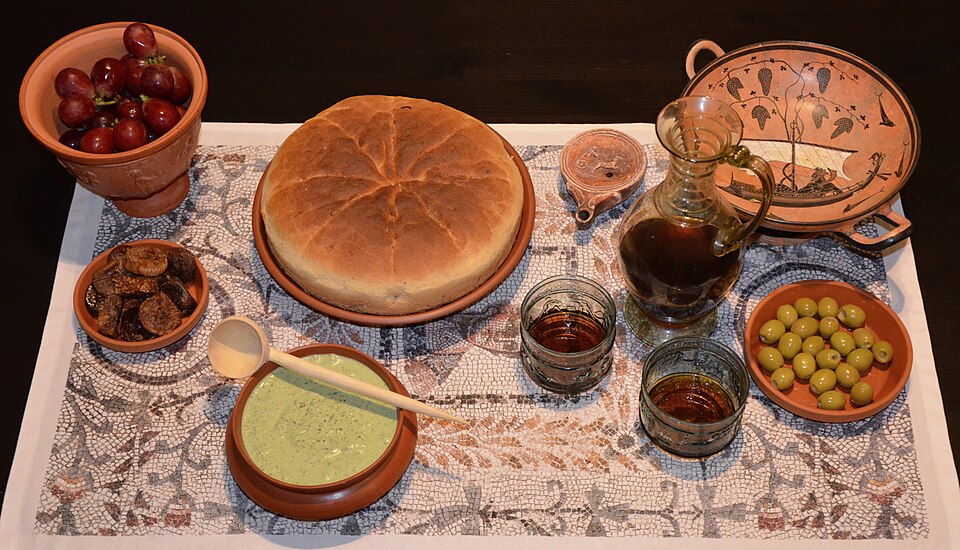
Belgian Cuisine-Crossroads to Western Europe

Belgian cuisine is a fascinating blend of history, geography, and cultural influences. Situated at the crossroads of Western Europe, Belgium has long been influenced by its larger neighbors—France, Germany, and the Netherlands—while developing a rich culinary identity of its own. The country’s cuisine is renowned for its hearty comfort food, exceptional seafood, world-famous chocolates, beers, and waffles.
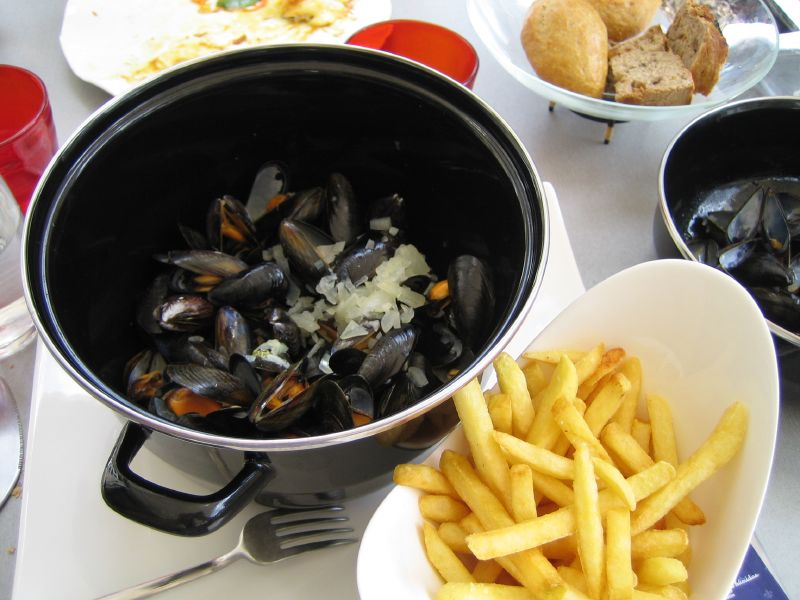
-Moules Fritte
The Origins
The foundations of Belgian cuisine date back to the Middle Ages (5th–15th centuries). During this period, most people lived in farming communities where wheat, rye, oats, vegetables, dairy products, and pork formed the basis of everyday meals. Monasteries played a vital role in preserving culinary traditions, brewing beer, making cheese, and cultivating herbs.
Belgium’s location along major European trade routes also brought exotic ingredients such as spices, sugar, citrus fruits, and coffee through the thriving ports of Bruges, Antwerp, and Ghent.
Medieval and Renaissance Influence
By the 15th and 16th centuries, Belgium had become one of Europe’s wealthiest trading regions. The Burgundian and Habsburg courts introduced refined dining customs that emphasized elaborate banquets featuring game meats, freshwater fish, pastries, and imported spices.
The fertile countryside supplied:
- Beef and pork
- Butter and cream
- Root vegetables
- Cabbage
- Apples and pears
These ingredients continue to define Belgian cooking today.
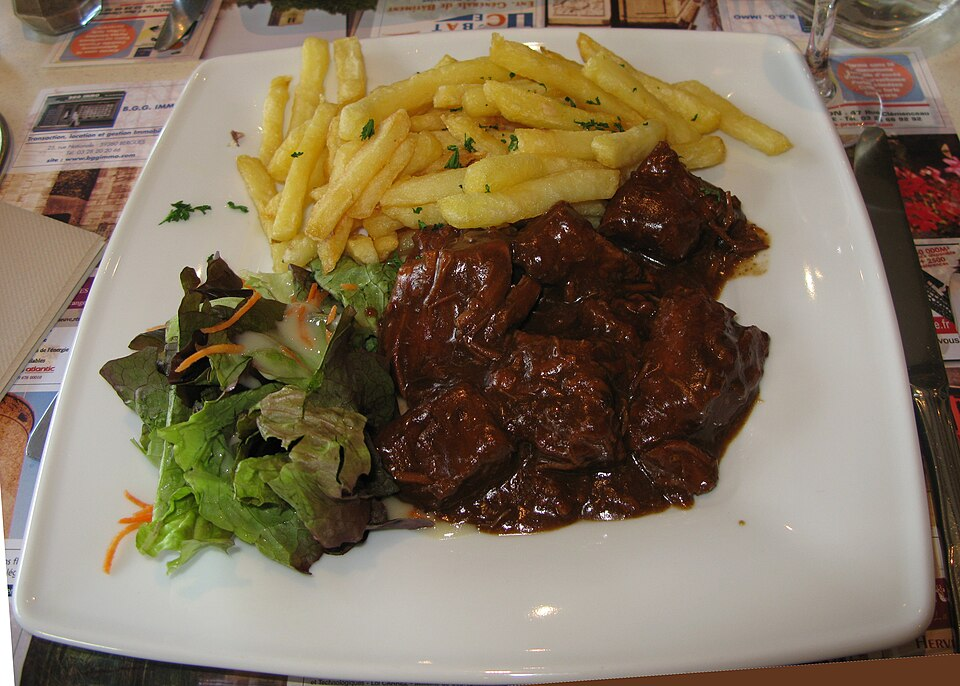
-Carbonade flamandel
Regional Diversity
Belgium has three distinct culinary regions.
Flanders
Located in the north, Flanders is known for hearty dishes and seafood.
Specialties include:
- Carbonnade Flamande (beef stew cooked in beer)
- Waterzooi (creamy chicken or fish stew)
- Grey shrimp croquettes
- North Sea mussels
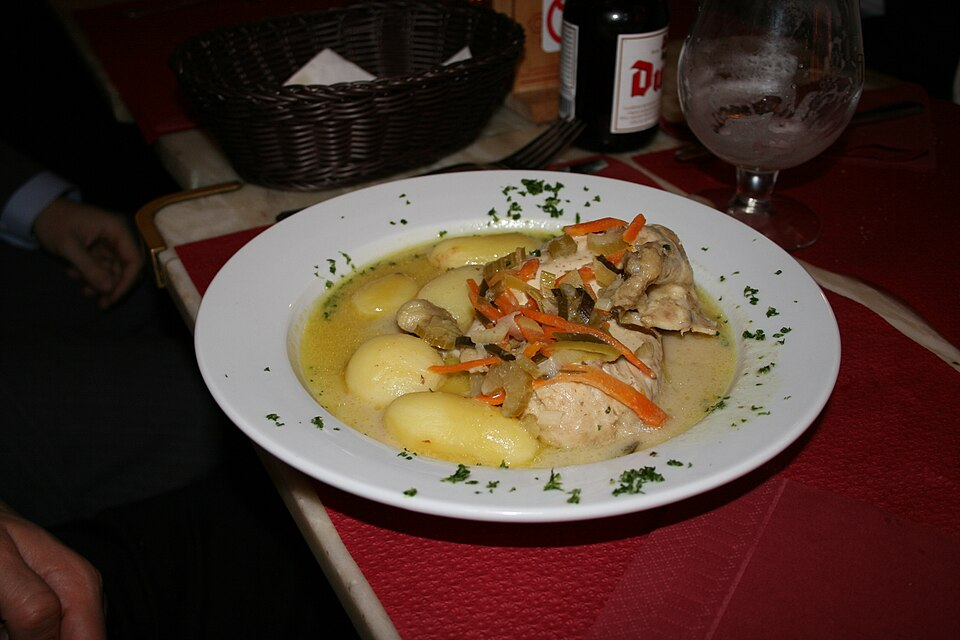
-Chicken waterzooi
Wallonia
The southern French-speaking region emphasizes rustic cooking.
Popular dishes include:
- Boulets Liégeois (meatballs with sweet-sour sauce)
- Ardennes ham
- Rabbit dishes
- Wild boar and venison
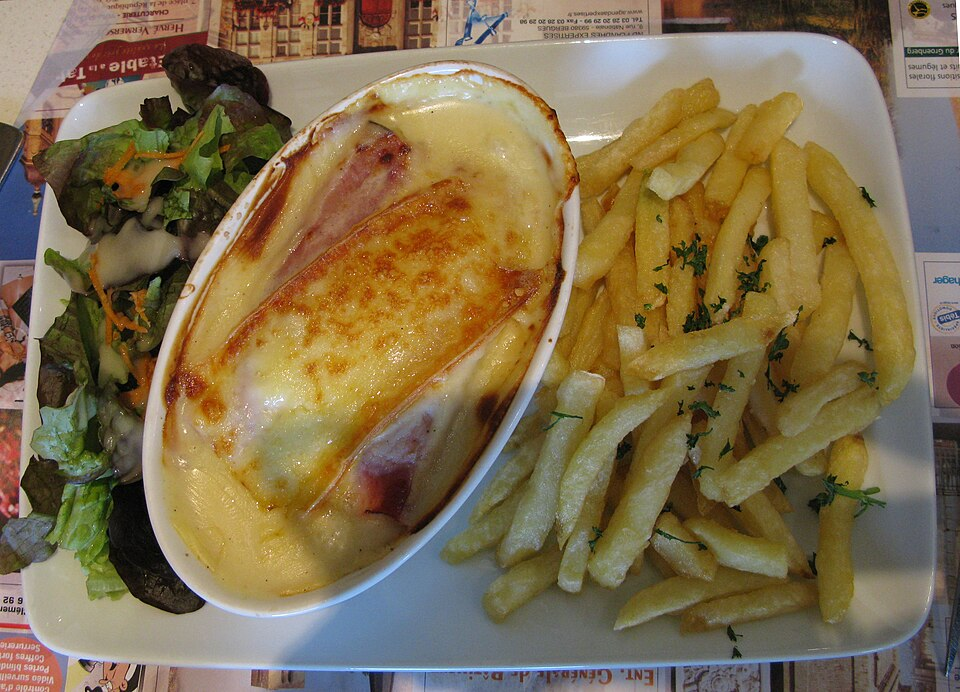
-Chicons au gratin
Brussels
Belgium’s capital combines Flemish and French traditions with international influences.
Famous foods include:
- Brussels waffles
- Mussels with fries
- Belgian chocolates
- Fine pastries
The Golden Age of Beer
Belgium is one of the world’s greatest beer-producing nations. Brewing began in monasteries during the Middle Ages when beer was often safer to drink than water.
Over centuries, Belgian brewers developed remarkable styles including:
- Trappist beers
- Abbey beers
- Lambics
- Gueuze
- Saison
- Witbier
- Strong ales
Today Belgium produces over 1,500 varieties of beer, many traditionally paired with specific local dishes.
Why Fries Are Belgian
Although often called “French fries,” Belgians proudly claim their origin. According to popular tradition, villagers along the Meuse River fried strips of potatoes during winter when fish was unavailable.
Belgian fries are distinctive because they are:
- Cut thick
- Fried twice
- Served piping hot
- Accompanied by mayonnaise or a variety of sauces
Moules-frites (mussels with fries) has become Belgium’s national dish.
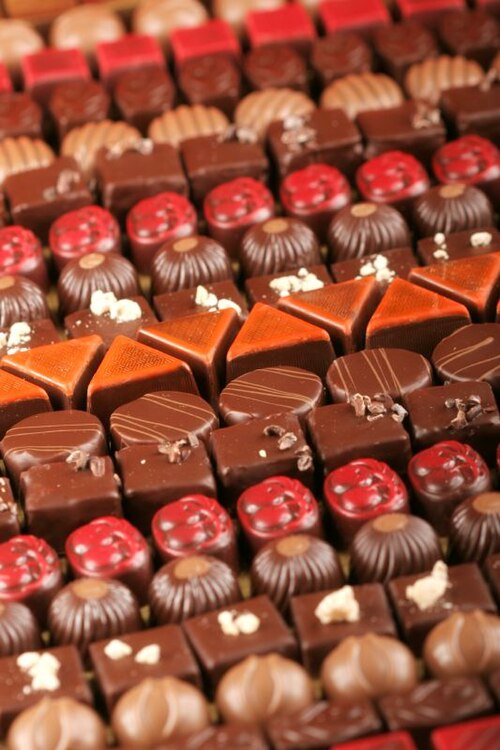
Chocolate: Belgium’s Sweet Legacy
Belgium’s chocolate industry flourished in the 19th century after cocoa became more widely available.
A major breakthrough came in 1912 when Jean Neuhaus invented the praline, a chocolate shell filled with cream, nuts, or ganache. Belgian chocolatiers are now internationally celebrated for craftsmanship and quality.
Well-known Belgian chocolate brands include:
- Neuhaus
- Godiva
- Leonidas
- Pierre Marcolini
- Côte d’Or
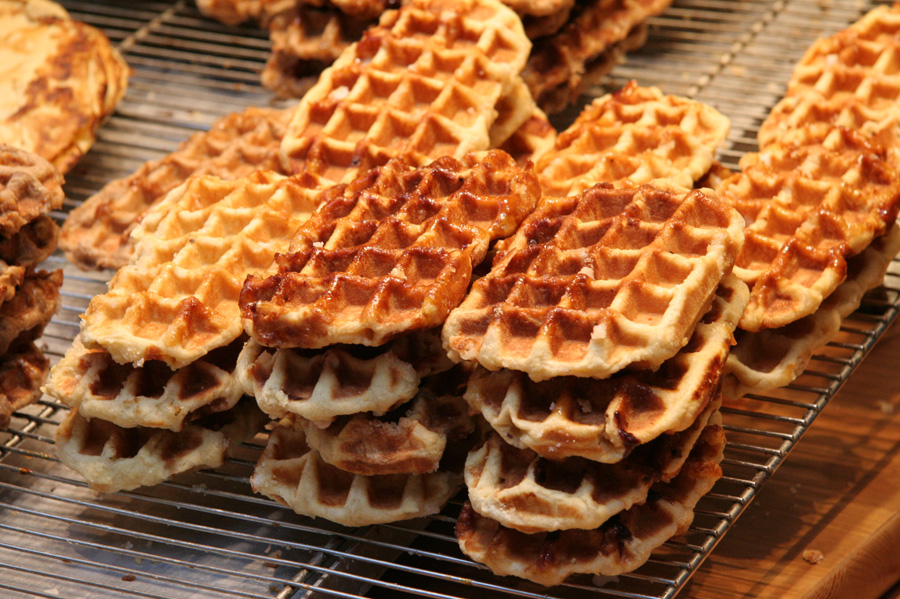
The Story of Belgian Waffles
Belgian waffles gained international fame after the 1964 New York World’s Fair.
There are two classic varieties:
- Brussels Waffle – light, crisp, rectangular, dusted with icing sugar or topped with fruit and cream.
- Liège Waffle – denser, sweeter, made with pearl sugar that caramelizes during baking.
Today they are among Belgium’s most iconic street foods.
Seafood and Agriculture
Belgium’s short North Sea coastline provides:
- Mussels
- Sole
- Plaice
- Shrimp
- Oysters
Its fertile farmland produces:
- Potatoes
- Asparagus
- Endives (Belgian chicory)
- Leeks
- Cabbages
- Apples
- Pears
- Dairy products
These ingredients form the backbone of traditional Belgian cooking.
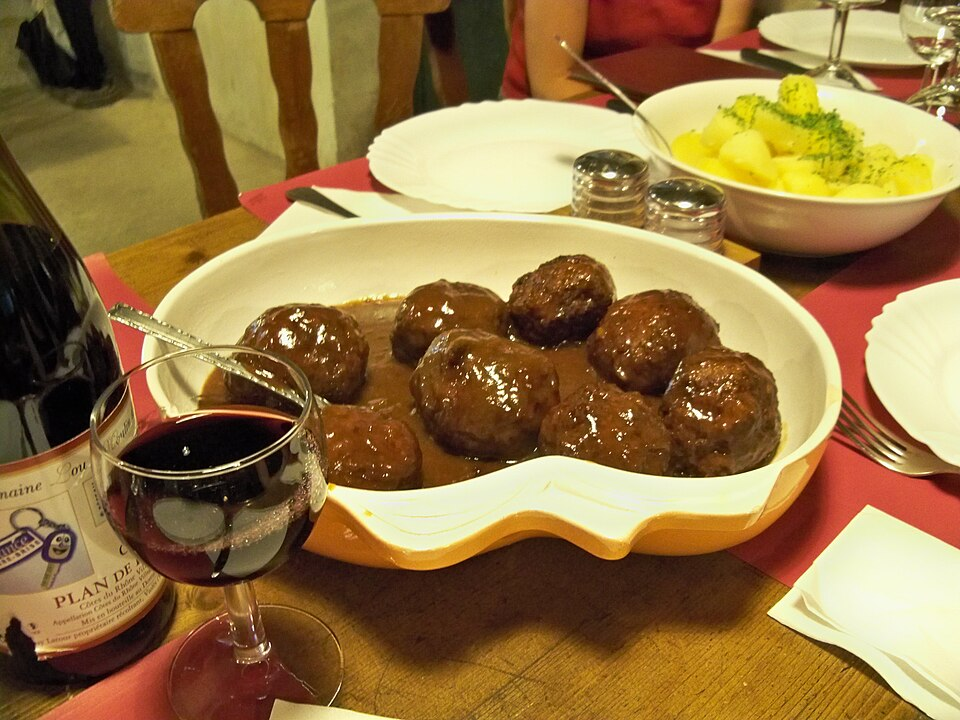
-Boules ala liegeoise
Influence of France and Germany
Belgian cuisine combines the elegance of French gastronomy with the hearty traditions of Germanic cooking.
French influence is seen in:
- Sauces
- Fine pastries
- Cream-based dishes
- Sophisticated desserts
German and Dutch influences contribute:
- Sausages
- Stews
- Bread
- Cured meats
- Beer culture
The result is a cuisine that balances refinement with comforting, robust flavors.
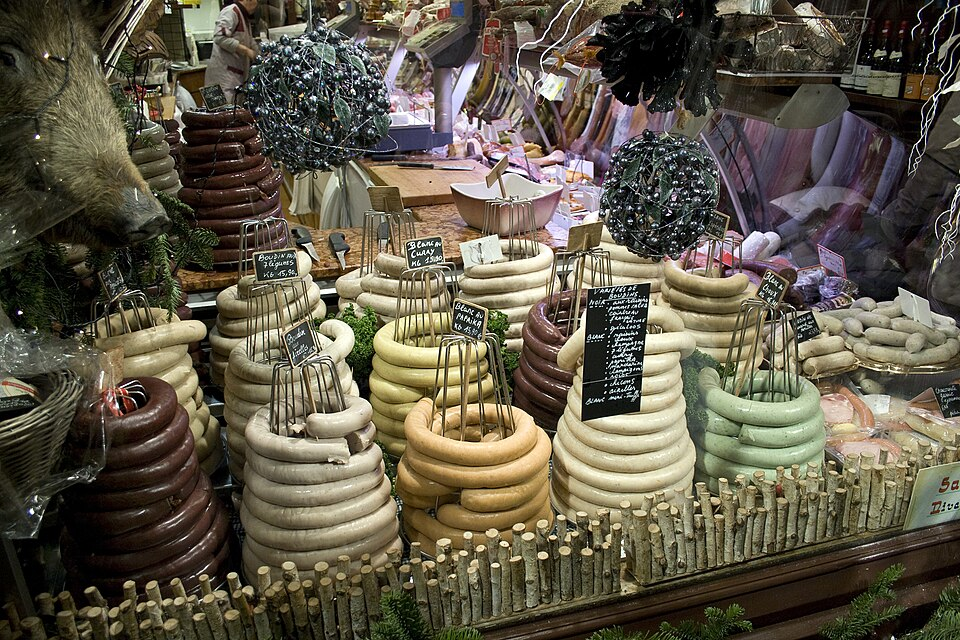
-Sausages for sale at Chrismas market
Modern Belgian Cuisine
Contemporary Belgian chefs celebrate seasonal ingredients while reimagining traditional recipes. Belgium is home to numerous Michelin-starred restaurants, yet simple neighborhood cafés and friteries remain central to everyday food culture.
Classic dishes such as carbonnade flamande, waterzooi, stoemp (mashed potatoes with vegetables), and moules-frites continue to be enjoyed alongside innovative interpretations that reflect Belgium’s culinary creativity.
Culinary Legacy
Belgian cuisine is often described as “French quality served in German quantities.” This saying captures its essence: refined techniques paired with generous portions. Rooted in centuries of trade, agriculture, monastic brewing, and regional traditions, Belgian food has earned worldwide recognition through its beers, chocolates, waffles, fries, and hearty home-style cooking. Today, it remains one of Europe’s richest and most distinctive culinary traditions.
famous dishes
Famous Dishes of Belgium
Belgian cuisine is celebrated for its comforting flavors, regional specialties, and high-quality local ingredients. Here are some of the country’s most famous dishes.
1. Moules-Frites (Mussels with Fries)
Belgium’s national dish, Moules-Frites consists of fresh North Sea mussels steamed with white wine, butter, shallots, celery, parsley, and herbs. It is traditionally served with crispy double-fried Belgian fries and mayonnaise.
Region: Nationwide, especially the Belgian coast
2. Carbonnade Flamande
A classic Flemish beef stew slow-cooked with dark Belgian beer, onions, mustard, and herbs. The beer gives the stew a rich, slightly sweet flavor.
Served with: Fries, mashed potatoes, or crusty bread
Region: Flanders
3. Waterzooi
A creamy stew originally made with freshwater fish but now commonly prepared with chicken. It includes vegetables such as carrots, leeks, celery, and potatoes in a rich cream and egg-yolk broth.
Region: Ghent
4. Stoemp
A comforting mashed potato dish mixed with seasonal vegetables such as carrots, leeks, spinach, cabbage, or Brussels sprouts. It is usually served with sausages, bacon, or meatballs.
Region: Brussels and Flanders
5. Vol-au-Vent
A puff pastry shell filled with a creamy chicken and mushroom ragout, often enriched with meatballs and served with Belgian fries.
Region: Throughout Belgium
6. Croquettes aux Crevettes (Grey Shrimp Croquettes)
A beloved Belgian appetizer made with tiny North Sea grey shrimp folded into a creamy béchamel, breaded, and deep-fried until golden.
Region: Belgian Coast
7. Boulets à la Liégeoise
Large beef and pork meatballs served in a sweet-sour sauce made with onions, vinegar, and Liège syrup (apple and pear syrup).
Region: Liège, Wallonia
8. Chicons au Gratin
Belgian endives wrapped in ham, topped with béchamel sauce and grated cheese, then baked until golden.
Region: Wallonia and Brussels
9. Lapin à la Gueuze
Rabbit slowly braised in Gueuze, Belgium’s famous sour beer, with onions, herbs, and prunes or raisins.
Region: Brussels
10. Filet Américain
Belgium’s version of steak tartare, made from finely minced raw beef seasoned with capers, onions, mustard, Worcestershire sauce, and spices.
Served with: Fries and salad
11. Liège Waffles
A dense, buttery waffle made with pearl sugar that caramelizes during cooking, creating a crisp, sweet exterior.
Region: Liège
12. Brussels Waffles
Light, airy, rectangular waffles dusted with icing sugar or topped with whipped cream, strawberries, bananas, or chocolate.
Region: Brussels
13. Belgian Fries (Frites)
Belgium’s iconic fries are traditionally fried twice for a crispy exterior and fluffy interior. They are served with a variety of sauces, especially mayonnaise.
14. Belgian Chocolate Pralines
Belgium’s signature confection, pralines are chocolates filled with ganache, cream, caramel, nuts, or fruit fillings.
15. Speculoos
A crisp, spiced biscuit flavored with cinnamon, cloves, nutmeg, ginger, and brown sugar, traditionally enjoyed with coffee.
Traditional Belgian Meal
A classic Belgian dining experience might include:
- Starter: Grey Shrimp Croquettes
- Main Course: Moules-Frites or Carbonnade Flamande
- Side: Belgian Fries with Mayonnaise
- Dessert: Liège Waffle or Brussels Waffle
- Sweet: Belgian Pralines
- Drink: Belgian Abbey or Trappist Beer
These dishes reflect Belgium’s rich culinary heritage, combining influences from French, Dutch, and German traditions while showcasing local ingredients and centuries-old cooking techniques.



Recent Comments